
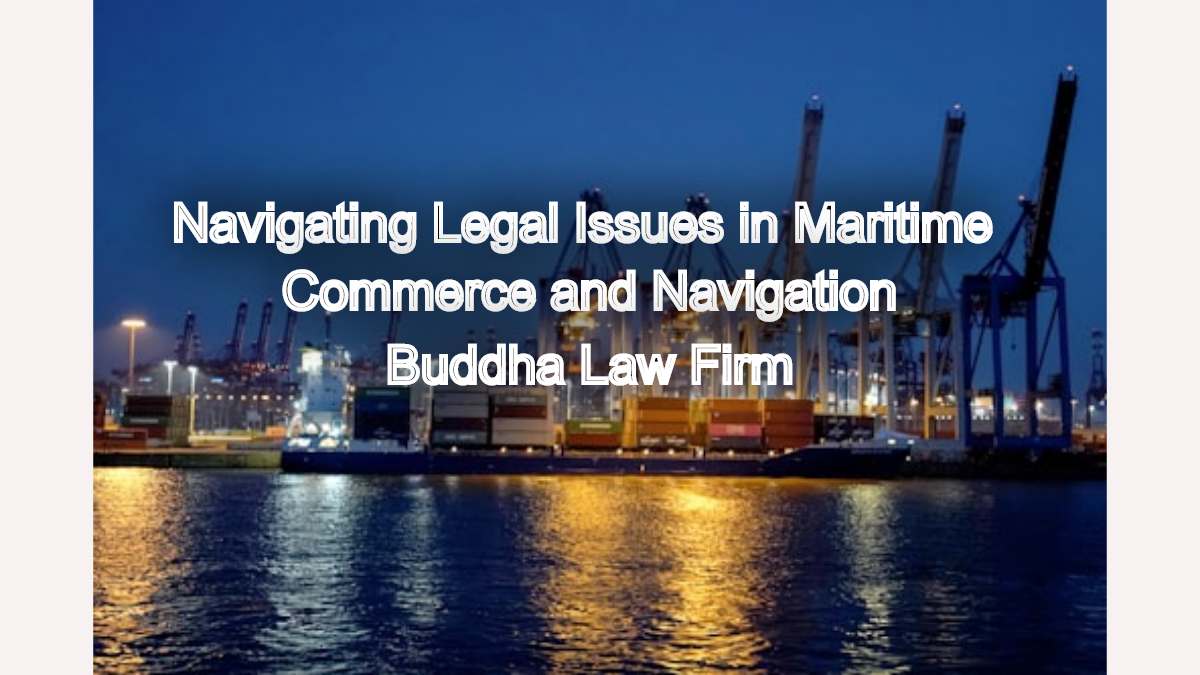
Admiralty Law Basics – Admiralty law is a unique and specialized body of law. It governs maritime commerce and navigation. This legal field deals with all sorts of issues. It covers everything from shipwrecks to cargo disputes. It also handles matters of contracts and personal injuries at sea. Understanding this law is crucial for anyone involved in the shipping industry. It’s like navigating a complex sea; therefore, you need an experienced captain. That’s where a specialized law firm comes in. Buddha Law Firm has vast experience in this area. We can help you steer clear of legal trouble. We can also help you resolve disputes when they arise. This article will explain the basics of admiralty law. It will also show why having legal expertise is so important in this field.
Navigating Legal Issues in Maritime Commerce and Navigation
The Foundation of Admiralty Law
Admiralty law, also called maritime law, is very old. Its roots trace back to ancient times. It has evolved over many centuries. It now includes international conventions and national laws. In India, a major part of this legal field is governed by the Admiralty (Jurisdiction and Settlement of Maritime Claims) Act, 2017. This Act has consolidated and modernized various old laws. It provides a clear framework for maritime claims. It gives specific high courts in India the power to hear these cases. These courts have admiralty jurisdiction. This means they have the authority to adjudicate disputes that arise on the water. Therefore, knowing which court has jurisdiction is the first crucial step.
Key Legal Concepts: A Shipowner’s Lexicon
To understand admiralty law, you need to know some key terms. One of the most important is maritime claim. The 2017 Act provides a comprehensive list of these claims. They include disputes over the ownership of a vessel. They also cover claims for damage caused by a ship. Furthermore, they include disputes over contracts for goods carriage. Another vital concept is a maritime lien. A maritime lien is a claim against a vessel itself. It exists even if the ownership of the vessel changes. It’s a powerful legal tool. It gives certain creditors, like crew members owed wages, priority over other claims. Consequently, a vessel can be arrested to satisfy a maritime claim. This means the court can order the vessel to be detained. It cannot leave the port. It remains under arrest until the claim is settled or a security is provided.
Navigating Common Maritime Disputes
Maritime disputes can be complex. They often involve multiple jurisdictions. They may involve international parties. One common issue is a collision at sea. When two vessels collide, determining fault can be a long process. The law apportions liability based on each ship’s degree of fault. If the degrees of fault cannot be established, liability is split equally. Therefore, it is important to have an experienced lawyer. Another frequent dispute involves cargo claims.
A cargo owner might sue a shipowner for damage to their goods. These claims are often governed by a bill of lading and a charter party. These are key legal documents in maritime commerce. They outline the rights and obligations of both the carrier and the cargo owner. A dispute might also arise from salvage. Salvage refers to the act of rescuing a vessel or its cargo from danger. The salvor is entitled to a reward. The amount of the reward is determined by a court. It is based on factors like the value of the salvaged property and the risk involved. Therefore, these disputes require careful legal analysis.
The Power of Ship Arrest
The ability to arrest a vessel is a unique feature of admiralty law. It is a powerful remedy. It provides a way to get a security for a maritime claim. The process is swift. The court can order the arrest of a vessel. This happens without a full trial. This is because a ship can sail away. Therefore, speed is essential. The claimant must show a valid maritime claim. They must also show that the defendant has a connection to the vessel. Once arrested, the vessel is in the custody of the court.
The shipowner must provide a financial guarantee to get the vessel released. This could be a bank guarantee or a cash deposit. If the shipowner fails to provide security, the court can order the judicial sale of the vessel. The proceeds from the sale are then used to satisfy the maritime claims. This powerful tool ensures that claimants have a way to enforce their rights. It gives them leverage in a dispute.
The Role of a Law Firm
Admiralty law is not for general practitioners. It is a highly specialized field. A law firm like Buddha Law Firm provides specific expertise. We understand the nuances of the maritime industry. Know the relevant international conventions. We are familiar with the procedures of the high courts. Our legal services cover a wide range of issues. We assist with ship arrests and releases. We handle disputes related to charter parties and bills of lading. Advise on marine insurance claims.
We also handle claims for personal injury or death at sea. Our lawyers are experts in drafting and negotiating maritime contracts. This is a preventative measure. It helps clients avoid future legal issues. Furthermore, we represent clients in court and in arbitration proceedings. We work closely with our clients. Understand their business needs. We provide tailored legal solutions. Our goal is to protect your interests. We work to ensure your business operations run smoothly. We are your legal compass on the high seas.
FAQs on Admiralty Law
The Admiralty Act, 2017, is a key piece of legislation in India. It consolidated and updated several old laws to create a modern and clear legal framework for maritime claims.
A maritime claim is a broad term for a legal dispute related to the sea. The 2017 Act lists many types of claims, including disputes over ship ownership, cargo damage, and unpaid crew wages. It provides a legal basis for a party to seek relief from a court.
A ship arrest is a legal procedure where a court orders a vessel to be detained in a port. This is a powerful remedy used to secure a maritime claim. The vessel cannot leave until the claim is settled or the shipowner provides financial security, such as a bank guarantee, to cover the potential debt.
A maritime lien is a special type of claim against a ship itself. It’s a security interest that attaches to the vessel and travels with it, even if the ownership changes. This gives certain creditors, like crew members, a priority right to be paid from the proceeds if the ship is sold to satisfy a claim.
We offer specialized legal expertise to navigate the complexities of maritime law. Our services include advising on maritime contracts, assisting with ship arrests and releases, handling cargo and collision claims, and representing clients in court. We act as a legal compass to ensure our clients’ interests are protected in the global shipping industry.
Conclusion: A Safe Passage Through Legal Waters
The maritime world is a global industry. It involves huge risks and high stakes. A single legal mistake can be very costly. Admiralty law provides a legal framework for this complex environment. It offers remedies for disputes. It protects the rights of various parties. Therefore, it is a vital field of law. The Admiralty Act, 2017, has brought clarity and uniformity to Indian maritime law. It has streamlined the process for maritime claims. It has made India an attractive jurisdiction for international shipping.
However, the legal waters remain complex. Navigating them requires a deep understanding of the law. It requires experience. Buddha Law Firm offers that expertise. We are dedicated to providing swift and effective legal solutions. Help shipowners, charterers, cargo owners, and insurers. We ensure a safe legal passage. If you are involved in maritime commerce or navigation, legal guidance is not a luxury. It is a necessity. Our team is ready to help you chart a course toward a successful outcome.
Read More
- Jones Act Claims: Understanding Protections for Maritime Workers in Injury Cases
- Maritime Accidents: Legal Rights and Remedies for Injured Seafarers and Passengers
- Cross-Border Dispute Resolution: Legal Strategies for Resolving International Conflicts
- International Trade Agreements: Legal Frameworks and Implications for Businesses
- Human Rights Law: Addressing Global Challenges and Promoting Universal Principles
- Ministry of Ports, Shipping and Waterways: